Every driver and fleet we talk to has a story. A load that was supposed to be clean and easy turns into a long shoulder stop. Or a quick drop and hook becomes a mess because the trailer would not lock right. Most of the time, it is not some mysterious failure. It is worn, neglect, or a small issue that kept getting ignored because everything still “felt fine.”
The 5th wheel and kingpin setup is one of those areas that can look okay at a glance, but still be one hard brake away from a serious problem. And if DOT decides to take a closer look, we can end up Out Of Service over something that was completely preventable.
At Birmingham Mobile Semi Repair, we see these issues in real life all the time. When the road throws you a curveball, we catch it. But we would rather help everybody avoid the curveball in the first place. So let’s walk through what to inspect, what usually goes wrong, and what to do if the lock is not right.
What OOS Really Looks Like In The Real World
Out Of Service is not just a slap on the wrist. It is time, money, and stress stacked up fast. A load gets delayed, a customer gets angry, dispatch gets loud, and the day is basically gone. For fleets, it is even worse because one unit being down can ripple into missed appointments and reshuffled routes.
The frustrating part is that many 5th wheel and kingpin problems start as small symptoms. A little clunky on takeoff. A tug test that feels “sort of” okay. A jaw that looks like it is closed, but it is not actually seated around the kingpin correctly. Those are the exact situations that can lead to a dropped trailer, damaged apron, bent components, or a DOT inspection that finds a coupling that is not secure.
Why The 5th Wheel And Kingpin Get Ignored (Until They Don’t)
A lot of drivers are doing the right things. Pre-trips, quick looks, grease when it is convenient, and a good tug test. The problem is that the coupling system lives in a nasty environment. Road grit mixes with old grease. Water gets in. Parts wear slowly. And because it still couples and pulls, it is easy to assume everything is fine.
Another big one is the “visual trap.” From the side, the handle might look set. From behind, the jaws might look closed. But if the kingpin is high, the trailer is nose down, the 5th wheel is dry, or the jaws are worn, it is possible to get a false lock. Everything feels connected until the weight shifts.
So we want to get a little more intentional about inspections. Not complicated. Just consistent.
Fifth Wheel Inspection Basics We Should Not Skip
A good inspection is a mix of looking, touching, and testing. It takes a few minutes, and it can save a whole day.
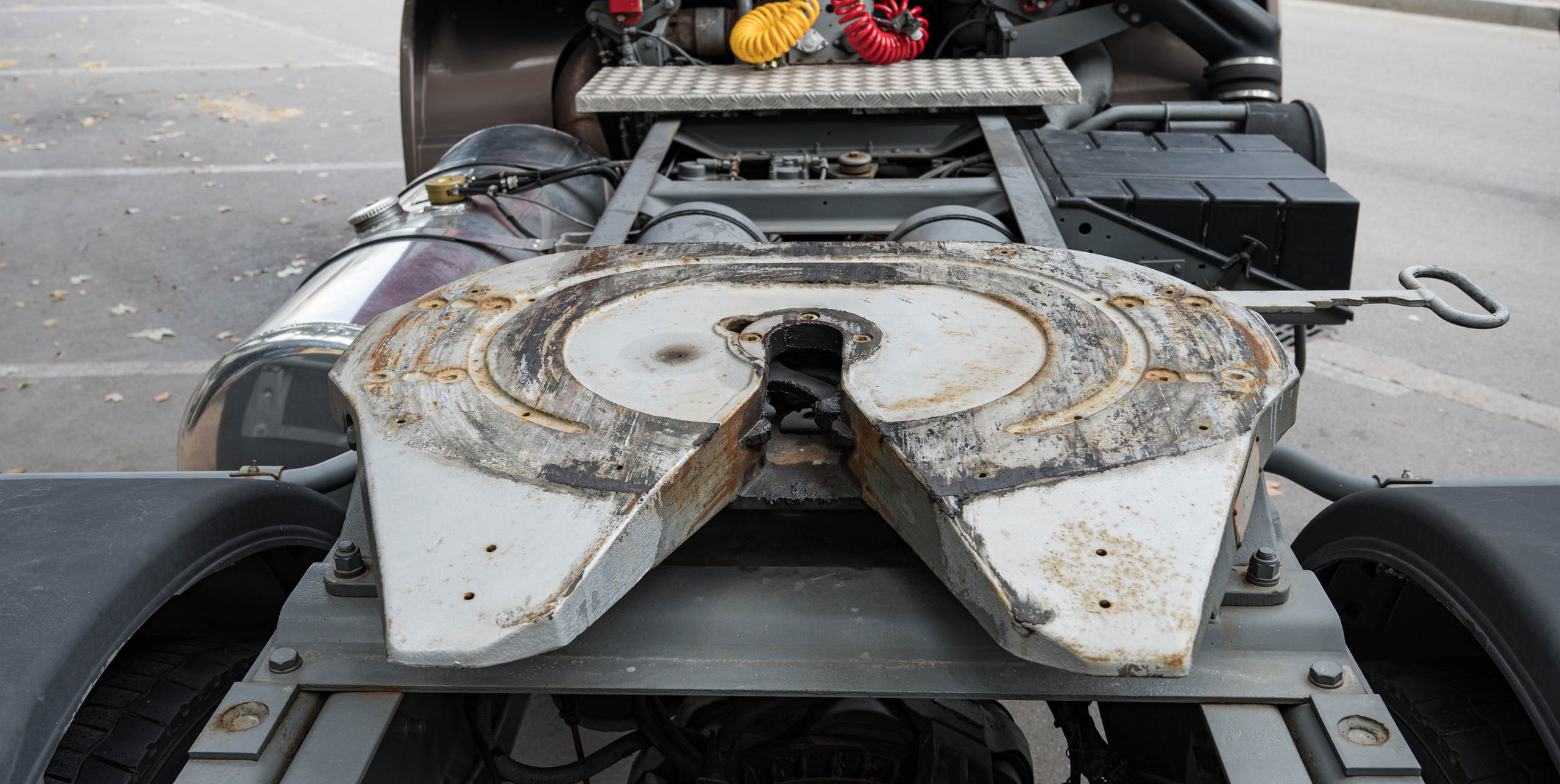
Start with the obvious stuff. Is the 5th wheel plate cracked? Are the mounting bolts present and tight? Are there signs of movement between the 5th wheel and the mounting rails? If we see shiny metal where paint used to be, that can be a clue that things are shifting.
Then check the coupling area. The jaws, throat, and locking mechanism should not be packed with dirt and dried grease. Old grease is not “good enough” because it can hold grit like sandpaper and speed up wear. We also want to look at the release handle and linkage. If it is bent, loose, or sticking, that is not something to gamble with.
Grease matters too. A dry 5th wheel does not just squeak; it can cause binding and abnormal wear. It can also make coupling harder and increase the risk of a bad lock. We like seeing an even grease film, not a thick pile in one spot and bare steel in another.
Kingpin And Trailer Apron Checks That Get Missed
Drivers often focus on the tractor, but the trailer side is just as important. The kingpin is doing the work, and the trailer apron is taking the load.
Look for a kingpin that is worn, gouged, bent, or has a “necked down” look where the jaws grab. If the kingpin is damaged, it can lead to poor engagement or accelerated jaw wear. Also, check the kingpin weld area for cracks or separation.
Now check the apron. A bent, cracked, or heavily worn apron can change how the trailer seats on the 5th wheel. If the trailer is not sitting flat, coupling forces get weird, and that is when we see repeated hard coupling, high hook-ups, and missed locks.
We also want to make sure the landing gear is not leaving the trailer at a bad angle during coupling. If the trailer is too high, we can high hook. If it is too low, we can slam into the apron and beat up the 5th wheel and trailer plate.
Signs We Are Headed Toward A Coupling Failure
Sometimes the equipment tells us early. We just have to listen.
If we feel a clunk when starting or stopping, that can be normal slack in the driveline, but it can also be coupling play. If we hear popping or banging during turns, that can be the trailer shifting on the plate because things are dry or worn.
Hard coupling is another warning. If we have to slam under trailers all the time, something is off. It might be trailer height. It might be a dry plate. It might be worn jaws. It might be a bent handle or damaged locking components.
And if we ever pull the release handle and it does not move smoothly, or it takes a lot of force, that is not “just how it is.” That is a reason to inspect deeper.
The Tug Test And Visual Check (And What They Don’t Catch)
A tug test is still one of the best quick safety steps we can do. Couple, set trailer brakes, ease into it, and confirm it holds. But the tug test is not perfect if the trailer brakes are weak or out of adjustment. It is also not perfect if the lock is partial, but it still grabs enough to pass a gentle pull.
The visual check matters too. We should be looking at the jaws around the kingpin, not just the handle position. On some setups, we can use a flashlight and confirm full jaw engagement. If we see daylight where the kingpin should be fully seated, that is a problem.
Also, it is worth checking the gap between the trailer apron and the 5th wheel plate. A noticeable gap can mean a high hook or a bad seat. We want that trailer apron sitting down tight on the plate.
Common Issues We Find On The Road In Birmingham
We get called out for coupling-related issues more than people expect, especially around busy freight areas and tight yard situations.
A few patterns show up again and again:
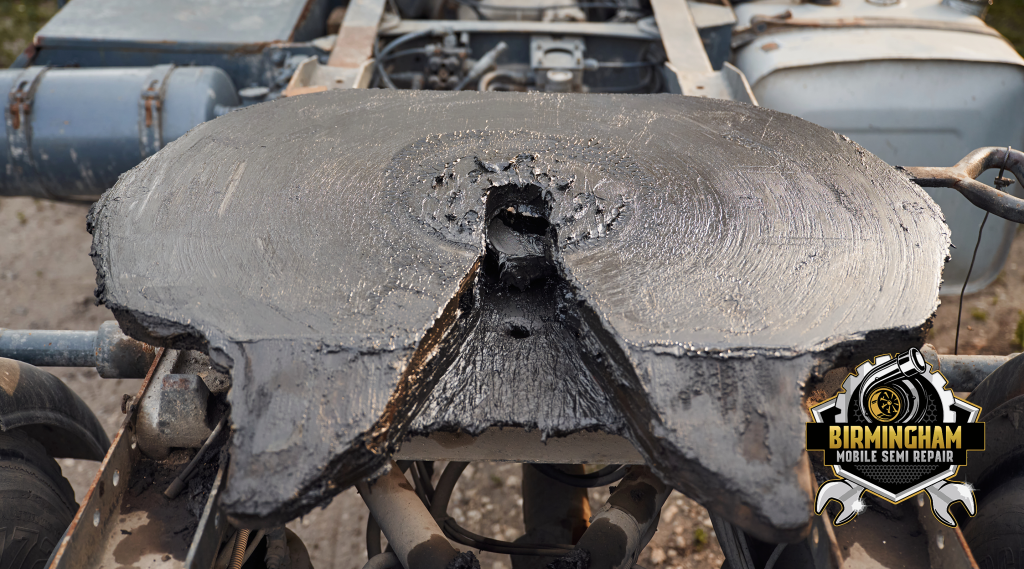
- Dry 5th wheel plates that are shiny and worn, usually paired with hard coupling complaints.
- Worn or damaged jaws that still “work” but do not hold correctly under load shifts.
- Bent or sticky release handles and linkages, sometimes caused by improper pulls or corrosion.
- Kingpins that are heavily worn or damaged, leading to repeated coupling problems with multiple tractors.
Those are not theoretical issues. They are the kind that turn into dropped trailers, damaged air lines, and emergency roadside calls at the worst time.
What We Can Do During A Quick Yard Inspection
Even when time is tight, a fast routine helps. We can check trailer height before backing under. We can glance at the plate for grease coverage. We can look at the jaws after coupling. Then tug test and re-check.
And it helps to slow down during the coupling itself, and back in smoothly. Listen. Feel. If it feels like a slam, we should stop and see why. Good coupling should feel controlled, not violent.
If we ever suspect a high hook, we should not talk ourselves into “it’s probably fine.” Drop it safely and re-couple correctly. High hooking is one of those mistakes that can look locked until it suddenly is not.
When It’s Time To Call For Mobile Help Instead Of Guessing?
There is a point where we should stop experimenting. If the jaws will not lock consistently, if the handle sticks, if the kingpin looks damaged, or if we see cracks or excessive wear, it is time for a real inspection and repair.
Mobile service is especially useful because we can get eyes and hands on the coupling system where the truck is sitting. No risky limping. No waiting days for a shop slot if the unit is loaded and on a schedule. We come out, diagnose, and help get everybody safe and compliant.
We also keep the bigger picture in mind. Sometimes the “5th wheel problem” is actually a trailer height issue, a landing gear habit, or a lubrication problem that needs a better routine. Fixing the part without fixing the cause just brings the same issue back.
A Simple Maintenance Habit That Prevents A Lot Of Downtime
If we had to pick one habit that prevents the most trouble, it is consistent cleaning and greasing plus regular close-up checks of the jaws and kingpin condition. It is not glamorous, but it works. For more details on how to properly maintain your semi-truck’s fifth wheel, check out these greasing tips.
When we combine that with proper coupling technique and a real visual confirmation of jaw engagement, the odds of getting surprised drop fast. And that is the whole goal. Keep wheels turning, keep loads on time, and keep inspections boring.
Let’s Keep Our Next Load Simple
The 5th wheel and kingpin are not the place to “hope it holds.” A few minutes of inspection can protect our equipment, our time, and our safety rating. If we are dealing with a suspicious lock, a sticking release, unusual noise, or visible wear and damage, we can get it handled before it turns into an OOS situation on the side of the road.
For fast, professional mobile help, call us at Birmingham Mobile Semi Repair in Birmingham, AL today at (307) 922-1966. When the road throws you a curveball, we catch it.

