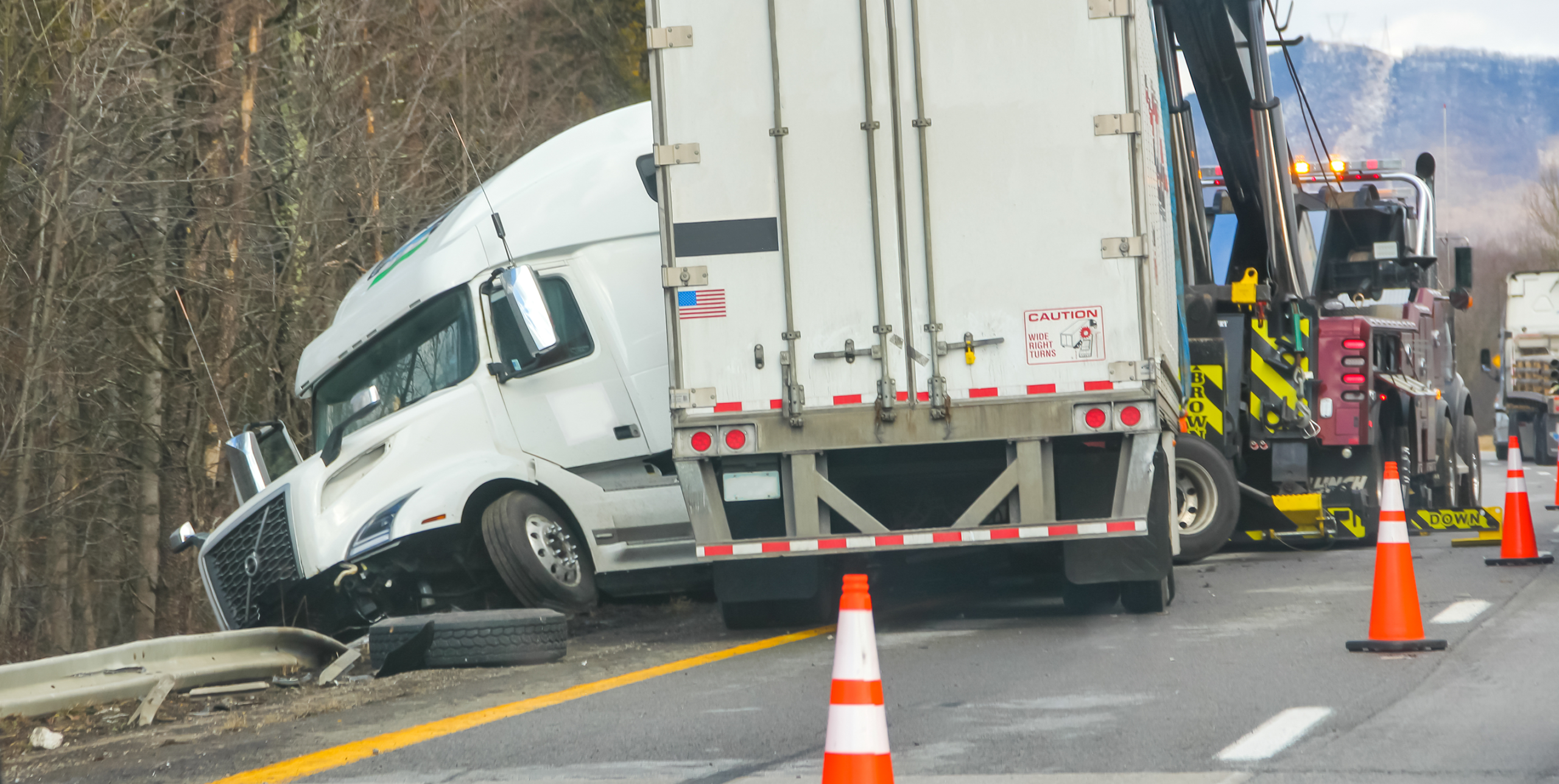
Roadside emergencies create a regular need for drivers who travel long distances under changing weather and traffic conditions and strict delivery schedules. A normal day at work becomes stressful when drivers experience tire failure on the highway or sudden air loss on back roads, or overheating warning lights show up before they reach the next exit.
At Birmingham Mobile Semi Repair, we provide our services to drivers and fleet teams throughout Birmingham, AL, and surrounding areas. The good news is that most roadside situations become a lot more manageable when you treat them like a process: prevent what you can, prepare for what you can’t, and respond the same way every time.
Continue reading for actual strategies that enable you to maintain safety and safeguard your equipment while minimizing operational downtime during equipment failures.
Prevent Problems Before They Start
The easiest roadside emergency to handle is the one that never happens. The main factor that reduces breakdowns and helps businesses maintain predictable repair costs lies in preventive maintenance.
Your service schedule and owner’s manual become baseline references because every truck and application has unique requirements. You need to create a daily plan that matches your work hours and the various weather patterns which will occur throughout the entire year.
The brake system and cooling mechanism of a vehicle face greater stress when driving through city streets with frequent stops than they do when traveling on highways, and wintertime operations create additional work requirements for batteries, air dryers, and electrical systems.
We recommend that urgent warning signs should be treated as necessary work which needs to be scheduled right away instead of being treated as work that can be delayed.
The length of a service visit depends on three specific driver problems which include coolant loss, intermittent check engine light activation, and slow air leak problems. The most efficient method to return your truck to operational status requires you to book heavy-duty truck maintenance services because you lack sufficient time and proper tools and technical knowledge for the task.
Build A Clear Roadside Plan With Your Employer
Emergency situations cause experienced drivers to waste time because they lack knowledge about their company’s emergency response protocols. Take a few minutes to confirm what your employer or fleet manager expects before the situation requires immediate action.
Begin with basic information, which includes identifying your first contact person and determining their immediate data requirements. Many fleets maintain a designated roadside assistance contact number, which they use for their preferred repair partners while following internal procedures that allow them to monitor vehicle downtime.
You need to know how a roadside incident will impact dispatch operations, load management, and employee compensation. When everyone is on the same page, decisions happen faster, and you’re less likely to feel stuck waiting for instructions.
The same principle applies to owner-operators who use their personal operating procedures. Your roadside contact list should include essential contacts, together with details about your roadside protection and immediate access to vital documents about your truck.
Stock The Right Gear And Information In The Cab
When trouble hits, you don’t want to be digging through compartments or searching your phone for basic details. A simple kit and a little organization can save a lot of time.
Here are the essentials we suggest most drivers keep ready to go:
- Safety and visibility: reflective triangles, flares (where permitted), high-visibility vest, flashlight or headlamp, and extra batteries
- Basic support items: gloves, wheel chocks, zip ties, basic hand tools you’re trained to use, and a phone charger or power bank
- Critical info: insurance and registration, unit number, VIN, tire size, roadside policy details, and key phone numbers
Also, keep a way to document problems. Your phone is usually enough but you should develop a habit of taking clear photos to document warning lights and fluid leaks and tire damage and the entire area. The details assist dispatchers and technicians in making improved decisions which they can make before anyone reaches the emergency site.
First You Must Reach A Secure Area
Your first safety responsibility requires you to ensure protection for all people before starting your situation assessment. The truck needs to move towards the closest available location which provides a safe parking space at either a wide road shoulder a brightly lit parking lot a rest area or an exit ramp which creates distance from moving vehicles. You must activate your hazard lights at the first opportunity to give other drivers enough time to respond.
Drivers must decrease their speed through gradual stopping while they should not make sudden turns or steer with force. The parking brake needs activation after you stop your vehicle and you must use wheel chocks to secure your position when moving vehicles approach your area.
You must use warning devices to enhance safety when you can do it without putting yourself at risk. Your objective requires you to create distance between your truck and drivers who travel at highway velocities.
The Situation Assessment Requires a Risk-Free Evaluation Method
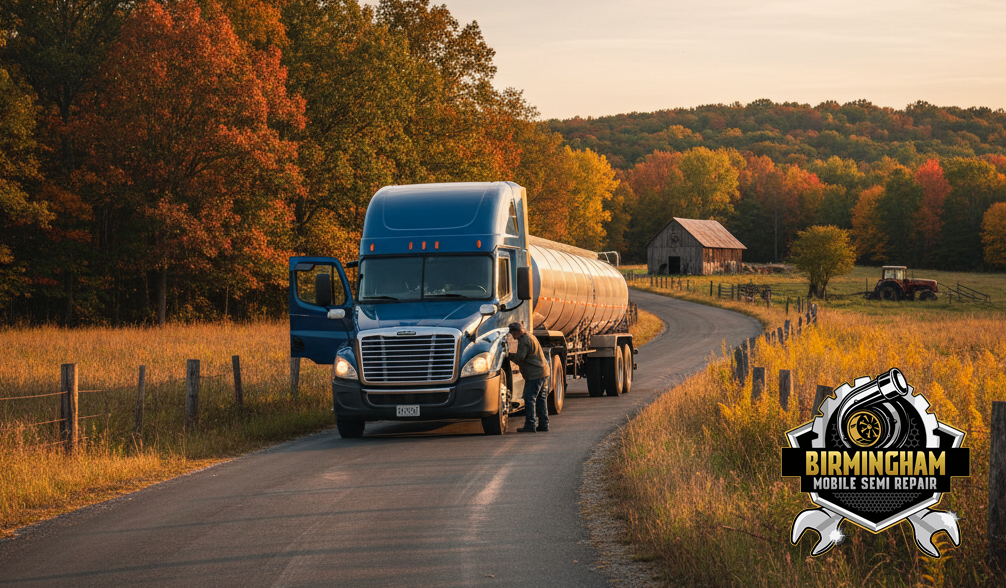
Your truck needs to be secured first before you can safely observe the ongoing situation. The situation contains obvious problems, which include a flat tire, a broken belt, a blown hose, and a trailer light problem. The system requires the driver to identify less obvious problems that appear through warning lights, strange sounds, and changes in vehicle performance.
Your evaluation needs to stay within actual boundaries. You need to obtain specialized training and proper tools and special permission before you start your work on any component. A quick walk-around can still give you valuable information, like whether there’s visible fluid loss, tire damage, smoke, or anything dragging under the chassis.
A good approach is to answer a few simple questions:
What do you see, smell, or hear? Did the issue begin suddenly or build over time? Are there any dashboard messages or warning lights? Can the truck idle normally? Is there an immediate safety hazard like fuel or coolant spraying, heavy smoke, or a hot wheel end?
If anything looks dangerous, move to a safe distance and call for help.
Decide: Quick Fix Or Roadside Assistance
The first category of roadside problems needs immediate assistance because you possess the necessary skills and the situation permits safe operation. The second category of situations requires instant contact with experts because they lead to dangerous situations, additional destruction, and legal problems.
The most common situation involves people experiencing a flat tire. You can begin driving again after your company permits you to do so because you possess the proper tools and your current location meets safety standards. You should request roadside assistance when you drive on a narrow shoulder and handle duals if you think your vehicle has wheel or hub damage.
The same logic applies to minor electrical issues like a blown fuse. The circuit can be fixed quickly when you already know its operation and have the necessary replacement parts, and the simple cause of the problem has been determined. The fuse will blow again immediately because you have a short circuit or a component failure, which will result in more problems during your repair attempts.
You should choose safety measures that protect your operational capacity when you experience uncertain situations. A professional diagnosis proves more cost-effective than the expenses that result from operational interruptions and equipment damage that comes from making incorrect assumptions.
Communicate Like A Pro To Speed Up The Repair
Your professional communication skills will help you complete your repair work faster. Your dispatchers and roadside assistance teams, together with repair service providers like ours here at Birmingham Mobile Semi Repair, need to know your current situation because this information will help them create an effective response plan, which includes essential resources for their mission.
you need to provide your current location information, travel direction, the distance to the next mile marker, and the nearest landmark. Provide all truck and trailer information, together with all symptoms and warning lights that indicate whether the truck can operate by itself. Please send your photos immediately after you have taken them.
You should inform them about anything that needs urgent attention, which includes whether you are obstructing a lane, whether the shoulder space is limited, whether you are present in a construction area, or whether the weather conditions create dangerous conditions. The response time and efficiency of the response will increase when you provide complete details regarding the situation.
Handle Common Roadside Scenarios The Smart Way
Roadside emergencies come in a few repeat categories. Here’s how we recommend thinking about some of the most common ones.
Tire Issues And Blowouts
If you have a tire problem occurring at a high speed, keep a firm grip on the wheel, avoid jerking the truck, and slow down gradually while maintaining control. Once stopped in a safe area, inspect from a safe position. Tire debris can damage airlines, wiring, fenders, and trailer components, so it’s worth checking for secondary damage before you authorize a quick tire-only fix.
Overheating Or Coolant Loss
When you observe rising temperatures together with a coolant warning, steam, and a sweet odor, you must treat this situation as a serious matter. Driving the vehicle will result in costly damage to the engine components. The driver needs to leave the roadway in a safe manner and only shut down the truck if it is safe to do so, and they must not touch the cooling system while it remains heated. A professional should confirm the cause, whether it’s a hose failure, radiator problem, coolant leak, fan issue, or something else.
Air System Problems
Air leaks, low air warnings, or brake performance changes are not “limp it to the next stop” issues. The truck becomes unsafe for driving when the air pressure fails to reach the required levels. Proceed to a secure area and request emergency support. Experienced technicians like ours can diagnose air system faults, but they need to complete a proper diagnosis by stopping their work at an earlier point.
Electrical And No-Start Events
Battery and charging problems produce warning signs, which show through slow cranking, dim lights, repeated fault codes, and unpredictable electrical functions. A jump start may solve your vehicle’s starting problem, but you must identify the problem source to prevent losing truck access during upcoming stops. The service team has the ability to assess battery health, alternator performance, cable conditions, and parasitic draw as necessary.
Brake Heat Or Wheel-End Concerns
You must not ignore any burning smell or smoke from near a wheel or the sensation of pulling! Brake drag, a sticking caliper, or wheel-end issues can turn into a fire risk. Find a secure area to park your vehicle while you let the components cool down in the system. This is a situation where waiting for professional help is usually the right call.
Protect Your Hours And Your Load While You Wait
Your work responsibilities change when help arrives because your new duties require you to maintain safety and follow regulations while controlling the situation. You must provide dispatch with updates about your current position and the predicted time of your arrival. The reefer settings need to be checked for their accuracy, and all fuel levels need to be monitored so problems can be documented when they first appear.
After-action reports should include the following details: the time when the problem appeared, the time when you stopped working on it, the name of the person you contacted, and the specific actions that you took to solve the problem. Fleets improve their response systems through this process, which enables owner-operators to identify maintenance requirements through their tracking systems.
Every Breakdown Should Be Transformed Into A Maintenance Success
Take five minutes to complete the process after resolving the emergency situation. The team needs to identify the exact failure points that prevented the system from functioning as intended. Hoses can fail because of age, abrasion, clamp failure, or routing problems. A tire can blow because of a road hazard, incorrect inflation, alignment issues, or suspension system wear. The information helps you develop strategies that will stop the occurrence of similar events.
You should use this moment to arrange the follow-up tasks that repair work discovered, although those tasks did not belong to the initial breakdown mission. Early identification of related wear patterns helps organizations avoid additional downtime events, which would occur at a later time.
Let’s Get You Back On The Road Faster
Roadside emergencies create stress for people, yet they can maintain their normal activities throughout the week. The most effective method to reduce equipment downtime and maintain operational safety begins with prevention, which requires developers to establish a detailed safety plan and conduct clear safety communication.
Our team provides assistance for both commercial truck service and heavy-duty support. You can schedule service or get guidance from our pros here at Birmingham Mobile Semi Repair by calling (307) 922-1966. We take pride in providing support to drivers and fleets throughout Birmingham, AL, and surrounding areas.