
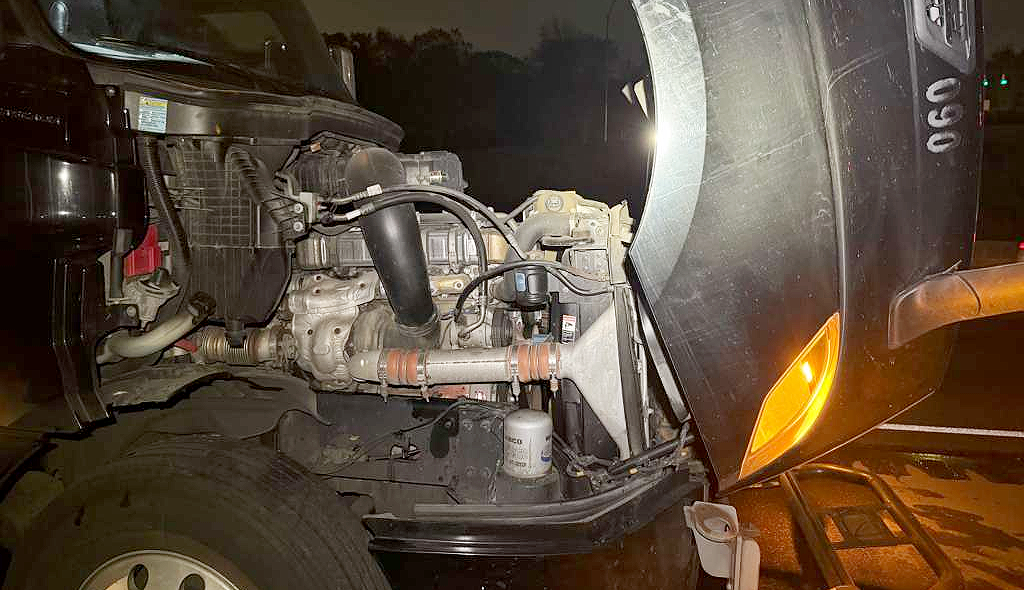
It is rare for large trucking failures to occur out of thin air. In our shop, we see that the semi trucks that eventually have to go into the frame or get a turbo replaced or towed often had some warning signs of trouble ahead, which were ignored because the truck was still driving and pulling. For the driver and owner of the semi-truck, the aim should be early detection of small problems, planning the repair, and ensuring reliability under stress.
This guide breaks down what we look for, what you can watch for day to day, and how we approach diesel engine repair to help prevent major breakdowns before they happen.
Early Warning Signs Drivers Should Never Ignore
A diesel engine gives clues long before it quits. The hard part is knowing which symptoms are “keep an eye on it” and which are “get it checked now.” Here are the issues we recommend treating as urgent because they often lead to expensive damage if they keep going.
Vibration, rough idle, or changes in the way the engine runs could be one of the most obvious and common symptoms. It may be a minor issue such as a boost leak or a failing belt-driven component, or something larger such as developing misfires, but any fuel and cylinder imbalance-related issue will lead to a buildup of mechanical damage. An increase in smoke production would be another major symptom.
Some haze during specific operating conditions could happen, but continuous smoke production indicates poor combustion or issues with fuel and air delivery, oil consumption, or coolant contamination. Smoke could be a sign of something small and easy to fix or something that will cause serious engine damage, such as cylinders washing out or runaway engine operation.
Temperature increases are yet another red flag. Engine overheating is not always connected to the cooling system and could be a sign of a faulty thermostat, clogged radiator, broken fan clutch, low coolant levels, or a faulty head gasket. Sometimes the temperature is not high enough to be considered overheating, but it is approaching that point, especially if you notice it happens while going down the grade.
Finally, don’t ignore warning lights accompanied by loss of performance, high regen cycles, or fuel efficiency decrease.
The Most Common Causes Of Preventable Diesel Breakdowns
Most major engine repairs we see started in a few predictable places.
Cooling system neglect is at the top of the list. Low coolant, incorrect coolant mix, contaminated coolant, weak caps, aging hoses, and neglected pressure issues can all set up overheating events that warp components and push engines into head gasket or EGR cooler failure.
Lubrication problems are just as costly. Skipped oil changes, wrong oil spec, excessive idling without proper service intervals, or ignoring a rising oil level can lead to bearing wear, turbo issues, and internal scoring. On modern diesels, fuel dilution is a real problem, especially when trucks are stuck in frequent regen cycles or doing lots of short-run work.
Air intake and boost leaks are another common “small issue, big result” scenario. A cracked CAC boot or loose clamp can cause over-fueling, higher EGTs, and extra soot load. That extra soot ends up in your DPF system, increases regen frequency, and can snowball into derates and downtime.
Fuel system issues also show up a lot. Contaminated fuel, water intrusion, restricted filters, and injector problems can create hard starts, rough running, and cylinder damage. Catching it early can be the difference between replacing a filter and replacing injectors or an entire high-pressure system.

Our Diagnostic Process: Fix The Root Cause, Not Just The Symptom
In our approach to repairing a diesel engine in a truck, we begin by determining the cause of the problem rather than simply replacing parts. This prevents waste of time and resources as well as return visits. Our first point of reference is the report from the driver since it will tell us about the problem’s history and give us clues about its development pattern. We then validate our findings by checking various parameters.
Among those we examine, depending on the nature of the reported issues, are boost leaks, coolant and combustion pressure in the cooling system, regen frequency and history, injector balance rates, oil level and quality trends, and others.
Should we suspect internal wear, we will suggest conducting a cylinder contribution test or another relevant diagnostic procedure. By being precise in our initial diagnosis, we provide you with an exact solution right from the first time.
Preventive Maintenance That Actually Prevents Breakdowns
For preventive maintenance to be truly worthwhile, it should focus on monitoring trends and conducting proper inspections. From our experience working with owner-operators and fleet managers, these are the practices that yield the best results: Monitoring coolant level, oil level, and fuel economy trends. Slight changes in any of these areas might be the earliest signs of leakage or other trouble.
Checking charge air cooler boots, clamps, and intake pipes regularly. These parts may become worn, cracked, or damaged; however, many drivers miss such defects. Besides, don’t forget to adapt your service schedules to your vehicle’s operating environment. A truck that does more idling, runs short routes, or regens often requires shorter intervals.
When To Schedule Diesel Engine Repair Instead Of Pushing It
We understand the temptation to keep rolling when a truck is still moving freight. The problem is that many diesel issues start cheap and end expensive.
If you see your truck experiencing coolant loss without leakage, increasing operating temperatures, producing smoke constantly, having regen cycle failures, new knocking or ticking noises, losing power while operating at full load, or changes in the oil level, it is time to get it serviced.
Often those symptoms mean that you will either spend a lot more money and time or none at all, depending on how soon you take action. By scheduling the maintenance in advance, you will have multiple benefits: better availability of the right parts, minimizing downtime, and preventing surprises.
Let’s Keep Your Truck On The Road
Most large semi-truck breakdowns give warning signs first, and it is possible to prevent them with some foresight. If your truck experiences those symptoms or you need advice on scheduling preventive maintenance to minimize downtime in the future, give our pros here at Birmingham Mobile Semi Repair in Birmingham, AL, a call at (307) 922-1966, and we’ll organize the diesel engine repair for your truck.

