Before we call it a leak, we’d ask when you took the readings. A tire checked hot after a run can show less pressure once it’s cooled. That’s not necessarily air escaping. On the other hand, if the same tire keeps needing a refill while the others hold under similar conditions, we wouldn’t keep blaming the temperature.
Either way, another top-off isn’t much of an answer. We need to know what the assembly is doing and whether it’s been run low enough to suffer damage.
Get The Measurements Onto The Same Page
‘It was higher at the last stop’ leaves us with a few questions. Which gauge did you use? Has anyone checked its accuracy at commercial tire pressures? And had you just pulled off the highway, or had the truck been parked all night? We’d sort that out before treating the difference as lost air.
Start a set of cold readings before the truck goes to work. Follow the tire maker’s directions; ordinarily that means at least three hours parked. Jot down which wheel you measured and whether conditions changed. Your targets still need to suit the tires and load under approved vehicle and fleet guidance. And leave hot tires alone rather than bleeding them down to a cold target. They’ll read differently once they’ve cooled.
If you can’t get a repeatable reading, have the gauge and valve access checked. Two gauges disagreeing doesn’t prove either is correct. And a tire that looks fine can still be low.
The Valve Doesn’t Have To Make A Noise
You may hear absolutely nothing. By morning, though, the gauge is down again. We’d still want the valve checked: the core inside it, the stem itself, and where it seals at the wheel. Got extensions or connections for a monitoring or inflation system? Include those in the inspection. Putting a fresh cap on is not the same as finding the leak underneath.
Mention recent work on that wheel. We don’t take that as proof of an installation mistake; it’s simply useful history. The leak could be in the tread, around the bead, or in wheel damage that wasn’t apparent from a quick look.
Leave any embedded object in place for the technician. Pulling a nail out beside the road can change the situation in a hurry. A commercial tire repair also involves more than plugging whatever hole is visible. Casing condition, repair location, service use, and manufacturer limits have to be assessed professionally.
One Low Dual Affects The Other
The low tire may not look dramatic because its mate is carrying extra load. That is not reassurance. Now there may be two tires needing attention, even though only one first showed a pressure problem.
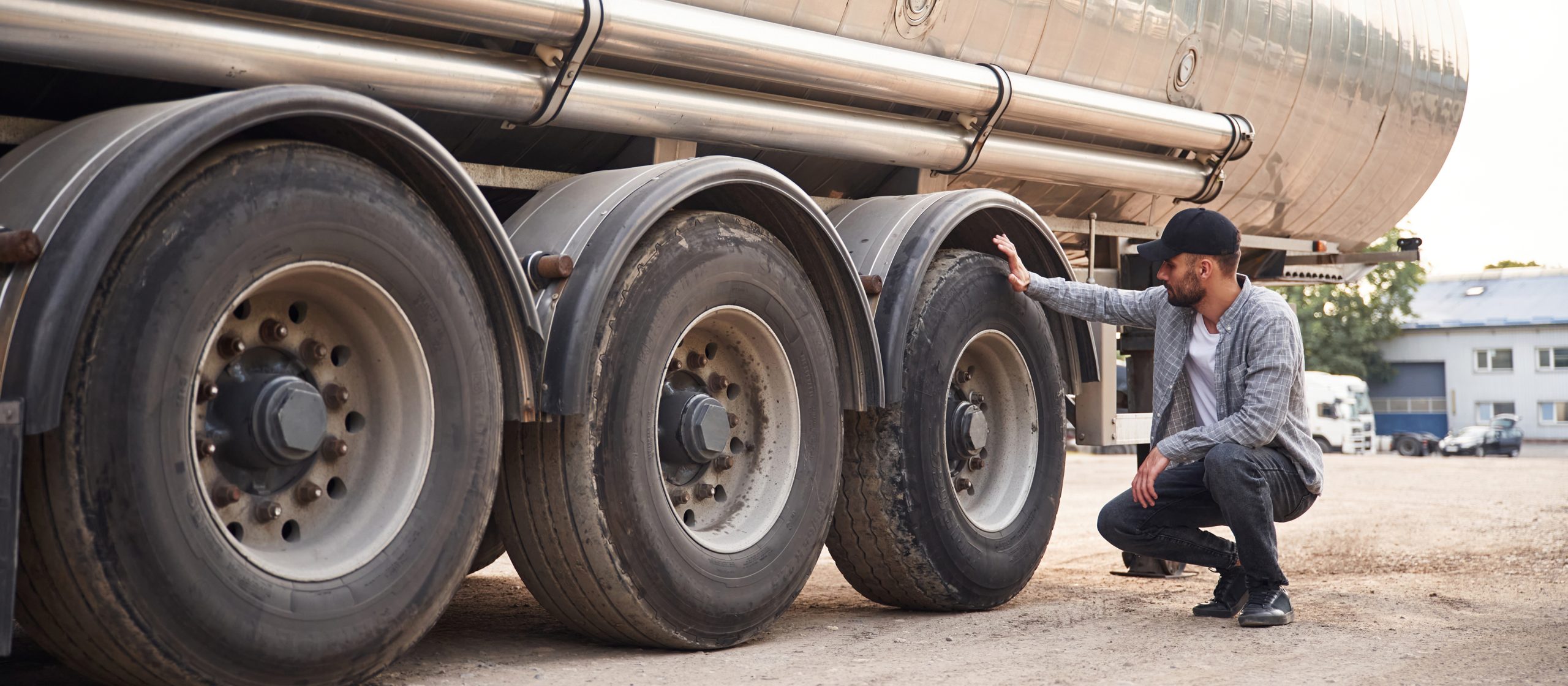
If a commercial tire has been run seriously low, have it and its dual mate assessed by qualified tire service personnel before reinflation. Hidden damage can make adding air dangerous. Please don’t use “let’s see if it holds” as an inflation test while standing next to it.
An automatic inflation system can hide this nuisance for a while. It supplies more air; the leak keeps leaking. If yours keeps having to catch up, tell the technician. We’d rather know that than hear only that the pressure looked okay when you parked.
Stop Where The Next Step Can Be Taken Safely
Rapid loss, a seriously low tire, visible damage, or abnormal handling calls for a safe stop and assistance. Don’t crawl near traffic to get one more reading, and don’t keep driving toward the next compressor on a tire that’s failing.
Once you’re somewhere safe, make a note of the affected wheel, the readings you have, and whether the tires were hot or cold. Call Birmingham Mobile Semi Repair in Birmingham, AL at (307) 922-1966 to discuss the problem and available help. We’ll work from those details with you. You shouldn’t have to keep feeding the same tire air just to get through the route.