
The tires of your semi truck are the only contact points between the thousands of pounds of cargo and the road surface. Tires showing unusual wear patterns are not only a maintenance issue but also a safety concern, so immediate attention is required.
Learning about the river/channel pattern of semi truck tire wear is of utmost importance in keeping your large vehicle operating safely and economically. The difficulties in tire maintenance during diesel repair can vary from straightforward cases of low pressure to intricate alignment issues, but not every unusual wear pattern indicates a problem. Some, such as river or channel wear, which we are going to discuss today, are, in fact, quite natural for certain positions of tires.
Being able to identify different types of tire wear gives you the ability to tell apart normal wear from indications of mechanical faults. The river/channel pattern is a scenario where, despite the initial perception, the situation is entirely normal. The ability to tell apart worrying and just watching may lead to saving time, money and avoiding stress while driving.
Understanding Unusual Tire Wear Patterns on Semi Trucks
The tires of your semi truck can give you important clues about the truck’s health. If you comprehend the different wear patterns which can take place, you will be able to spot problems early and prevent them from escalating to major ones.
Categories of Tire Wear Patterns
Tire wear on heavy-duty vehicles can be classified into two main categories: typical and unusual.
Typical Wear Patterns
These patterns are considered normal and indicate that the tires are wearing evenly:
- Even tread wear across the tire surface
- Gradual reduction in tread depth over time
- Consistent wear from edge to edge
Unusual Wear Patterns
These patterns are cause for concern and may indicate underlying issues with your vehicle:
- Cupping or scalloping along the tread
- Excessive wear on one side of the tire
- Diagonal wear patterns
- The river/channel pattern we’ll explore in detail
The Importance of Early Detection
It’s very common to be alarmed by the irregularity in the semi truck inspections you do. The majority of these signs point to misalignment, suspension problems, or wrong tire pressure as the main causes. Alterations in the mechanical aspects of the truck can lead to a decrease in the handling, fuel economy, and safety of your vehicle.
The early detection of these problems is very important in the maintenance of heavy vehicles. A minor abnormality can turn into a blowout or full tire failure in no time if not dealt with. Frequent visual inspections make it possible for you to tell the difference between the normal wear characteristics and the patterns that need immediate action.
Recognizing the River/Channel Pattern
Not all the strange wear patterns are an indicator of a serious issue. Some, like the river/channel pattern, just represent the natural aging of certain tires over time. This situation arises when certain areas of the tread get worn out faster than the others, forming a wavy look.
Even though this type of tire wear does not usually affect the tire’s quality or safety, it is necessary to keep an eye on it. The tire wear may be a little difficult to detect, so the driver could end up suffering from poor handling or reduced grip.
You can prevent or at least delay the need for tire replacement by being aware of these different tire wear patterns and their consequences, and making timely interventions with respect to the performance of your semi truck.
The River/Channel Pattern Understanding
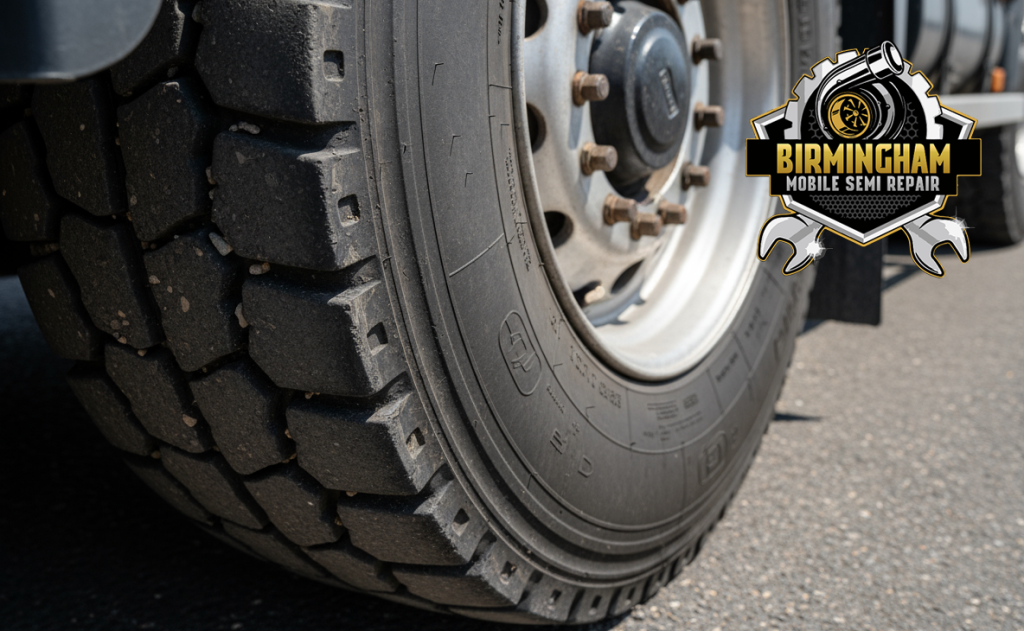
River pattern or channel pattern tire wear on your semi truck wheels looks exactly as its name indicates. The tire has special grooves that make the tread blocks appear to be cut into lines that truly resemble flowing water, as if it were carving through the land. The channels are like deep cuts on the sides of the tread blocks. What’s more, the features make the surface of the tire resemble a river with ups and downs, and it soon becomes quite easy to spot this once you know what to look for.
Where You’ll Find This Wear
This specific type of tire wear shows up in predictable locations on your rig. You’ll most commonly find it on:
- Steer tires at the front axle position
- Trailer tires that experience minimal power transfer
- Free-rolling wheel positions where tires aren’t driven by the engine
How the Pattern Develops
The pattern develops along the length of individual tread blocks rather than across the entire tire width. Each “river” or “channel” runs parallel to the tire’s circumference, creating a series of grooves that become more pronounced as the tire ages. Unlike other wear patterns that signal mechanical problems, these channels form on tires that roll freely without the stress of power delivery or heavy braking forces. The visual effect becomes more dramatic on slower-wearing positions where the tire has time to develop these distinctive markings without being replaced due to other wear factors.
Causes Behind the River/Channel Tire Wear Pattern
The river/channel pattern develops through a completely natural process that’s actually a sign of normal tire wear rather than a red flag for mechanical problems. When you’re dealing with free rolling tires, those that aren’t actively driving the vehicle, they experience a unique type of friction against the road surface. Unlike drive tires that constant push and pull, free-rolling tires simply rotates as the truck moves forward, creating a distinctive wear signature over time.
Here’s what makes this tire wear pattern different from other semi truck repair concerns:
Steer Tires: These front-axle tires bear the weight of the engine and cab while guiding your truck. They roll freely without power transmission, which means they wear more gradually and evenly across the tread blocks. The channeling effect appears as the rubber slowly erodes in specific areas where contact pressure is consistent.
Trailer Tires: Similar to steer positions, trailer tires are pure free rollers. They carry substantial weight but generate no driving force. This passive rotation creates the same river-like grooves as the tire surface makes millions of contacts with various road textures.
The key distinction in diesel repair and maintenance is recognizing that this wear pattern doesn’t stem from misalignment, improper inflation, or suspension issues. Your truck’s mechanical systems are functioning correctly, the tires are simply doing their job, and the channels form naturally as part of the wear process on these specific axle positions.
Impact of River/Channel Wear on Semi Truck Performance and Safety
The river/channel pattern presents a unique situation in heavy-duty vehicle maintenance because it doesn’t typically compromise your truck’s immediate safety or performance. Unlike other tire wear patterns that signal alignment problems or mechanical issues, this natural wear develops gradually on free-rolling tires without creating significant handling concerns.
Your truck’s traction remains largely unaffected by this pattern under normal driving conditions. The channels that form along the tread blocks don’t reduce the tire’s contact patch enough to create dangerous situations on dry pavement. You’ll still maintain adequate grip during regular highway driving and standard maneuvers.
Wet or icy conditions require more attention. The channels can potentially affect water dispersion slightly, though the impact remains minimal compared to other wear patterns. Your tires will continue performing their job, but keeping an eye on tread depth becomes important as the pattern develops.
When to monitor versus taking action:
Continue monitoring when channels appear shallow and tread depth stays within safe limits.
Schedule an inspection if you notice the pattern deepening rapidly or unevenly across multiple tires
Consider replacement based on overall tread depth rather than the channel pattern itself.
The pattern serves more as a visual indicator of your tire’s age and usage rather than an urgent semi truck repair concern. You don’t need to rush into replacements solely because you spot these characteristic river-like formations on your steer or trailer tires.
Preventative Measures and Best Practices for Tire Maintenance
The appearance of river/channel patterns does not indicate mechanical trouble, but still, having a thorough inspection of your semi truck from time to time helps you to identify the problems before they become too big to handle. Routine checks of the tires should be part of the heavy-duty vehicle maintenance schedule of inspections.
Key Inspection Practices:
Weekly visual checks – Walk around your rig and examine tire surfaces for unusual patterns, checking both inside and outside edges of each tire
Monthly depth measurements – Use a tread depth gauge to track wear progression across all positions
Document your findings – Keep a log of tire conditions to spot trends that might indicate developing problems.
Check air pressure consistently – Proper inflation prevents accelerated wear patterns that could mask or complicate river/channel formations.
Whether or not you are seeing river/channel patterns, your diesel repair maintenance schedule should still include tire rotation every 6,000-8,000 miles. This procedure allows the wear to be evenly distributed across the tire fleet, prolonging the tire’s lifespan and saving you money on your investment.
Alignment checks deserve attention, too, even when river/channel wear appears normal. Schedule professional alignment inspections every 50,000 miles or whenever you notice:
- Steering pull or drift
- Uneven shoulder wear
- Vehicle handling changes
- After any significant impact or curb strike
These preventative measures keep your tires performing optimally and help you distinguish between natural wear patterns and those requiring immediate attention.
Birmingham Mobile Semi Repair’s Expertise in Handling Tire Wear Issues
When you spot unusual patterns like the river/channel wear on your semi truck tires, having a trusted partner makes all the difference. At Birmingham Mobile Semi Repair, we specialize in mobile semi repair services that bring expert diagnostics and solutions directly to you. Understanding Semi Truck Unusual Tire Wear: The River/Channel Pattern is just one aspect of our comprehensive approach to heavy-duty repair.
Our team is available 24/7 because we understand that breakdowns and maintenance do not observe a 9-to-5 workday. If you are having tire wear issues at 3 A.M on a highway or require a full inspection during a scheduled stop, our 24/7 presence guarantees that you will never be abandoned or in doubt about the condition of your tires.
What sets our service apart:
Advanced diagnostic equipment that quickly identifies whether your tire wear is a normal river/channel pattern or signals deeper issues
Experienced technicians trained specifically in diesel repair and heavy-duty vehicle systems.
Mobile capabilities that eliminate the need to limp your truck to a shop
Comprehensive tire assessments that look beyond surface wear to check alignment, suspension, and related components
Our technicians, though, don’t take a mere look at your tires. We inspect the whole situation, looking for additional mechanical problems that could speed up wear or make the vehicle unsafe. This deep and wide approach to heavy-duty vehicle maintenance gives you a reliable answer to whether that river pattern is normal wear or needs intervention.
Choose Birmingham Mobile Semi Repair
Recognizing the river/channel formation as one of the unusual tire wear of semi trucks gives you an advantage over the potential problems and also increases the performance of your fleet. Though this particular wear doesn’t necessitate correction, being aware of your tire conditions is a way of keeping your operations running smoothly.
The repair of your semi truck needs to be attended to by professionals who are familiar with the difficulties posed by heavy-duty vehicles. The expertise from us at Birmingham Mobile Semi Repair is brought directly to you, avoiding downtime and allowing the trucks to be where they should be—on the road generating revenue. Our team understands that every wear pattern is a narrative about your vehicle’s state, and we have the skills to read these signals correctly.
Don’t worry about tire issues! Our skilled technicians are here to assist you, whether you have river/channel wear patterns or mobile semi repair needs. We are incorporating technical expertise and adapting it to your exact circumstances with practical solutions.
For a tire wear evaluation, routine maintenance, or urgent repairs, contact us at Birmingham Mobile Semi Repair at (307) 922-1966 and get professional help. We make your success our top concern and are there for you around the clock to cater to your heavy-duty vehicle needs.