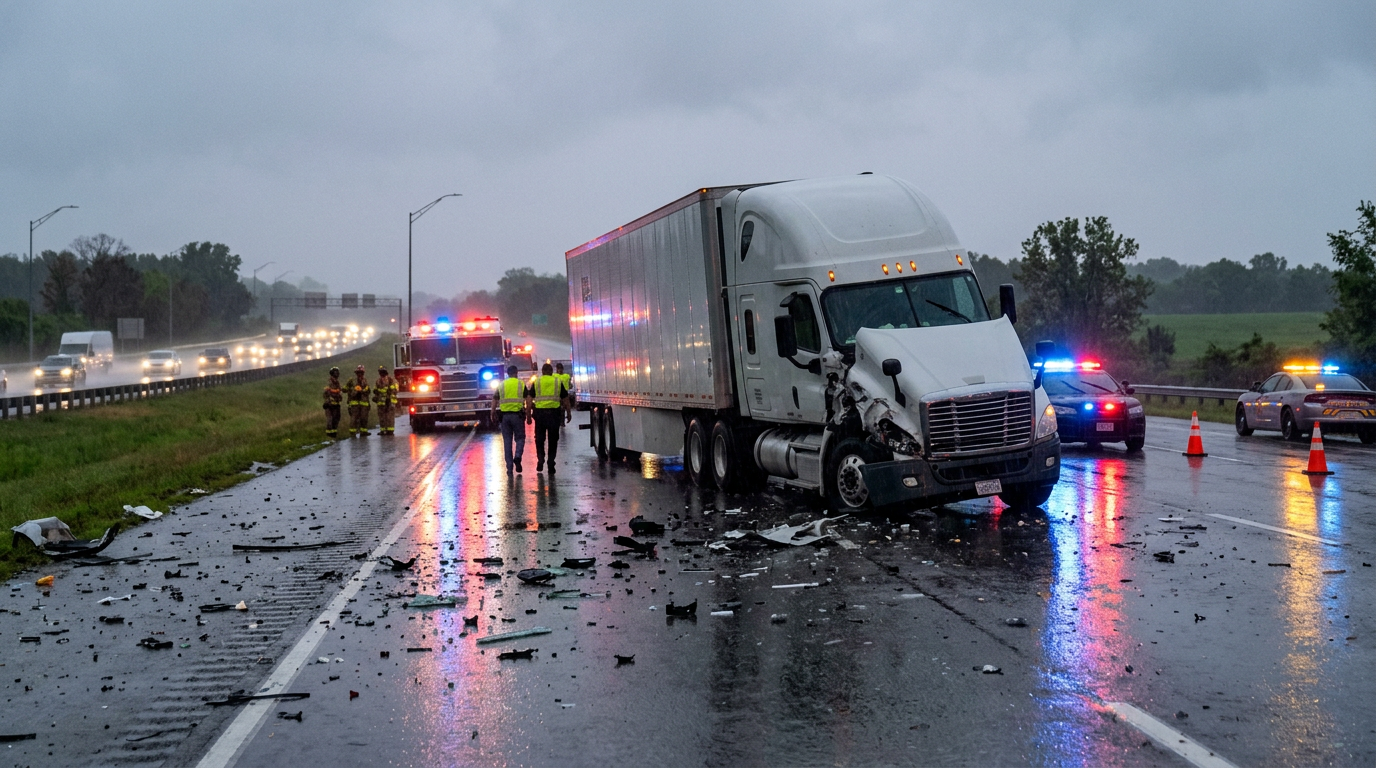
Forget the appointment time for a minute. You’ve had a semi-truck accident, and whether the freight will be late is no longer the first question. Is anyone hurt? Is there fuel on the road, fire, a blocked lane, or some other immediate danger? That’s a 911 call, ahead of pictures, dispatch updates, and certainly a repair estimate.
Tell the operator where you are and what you know about the danger, including hazardous cargo. Take their direction. At Birmingham Mobile Semi Repair in Birmingham, AL, we can talk about mechanical help once the emergency is under control. We can’t take the place of the people responding to it.
But It Still Starts
That can be a misleading bit of good news. The starter and engine haven’t told you much about the steering, brakes, or the load behind you. Please don’t take the rig for a little drive to find out.
There isn’t a blanket ‘stay put’ answer either. ALDOT explains Alabama’s quick-clearance rules for minor crashes where the vehicles can be driven safely. [1] Follow applicable law and the responders directing your scene, and move only when safe. Tell them about any concern with the equipment or load. An engine that starts is not proof that the truck qualifies for safe movement.
Don’t hold up a required safe move because you’ve only taken two pictures instead of ten. And don’t confuse ‘clear the lane’ with ‘leave the accident.’ The information exchange and reporting still have to happen, with you remaining at or near the scene as required.
Some Answers Will Have To Wait
‘Which tank?’ You might not be able to answer that from the cab. Say so. A repair diagnosis isn’t worth a walk through passing traffic, and a spill isn’t something to approach for a closer look. Damaged cargo needs to be left alone as well.
Switch on working hazards if it’s safe to do so. Then there’s the awkward question of where to wait. Inside? Outside? Ask the emergency operator, because a fire and oncoming traffic present very different problems. Take their guidance about an injured person, too; only an immediate threat justifies moving them. Leave the under-the-truck crawling and DIY fixes out of this entirely. A shoulder is no place to be finding out how badly something broke.
Give The Safety Office A Job
After emergency needs are addressed, the carrier’s safety contact or dispatcher needs to hear from you. Ask who’s saving the dash-camera footage, not just who’s aware of the accident. Who is actually keeping the recording from being overwritten?
Leave the rest of the record intact as well: photos, messages, ELD data, inspection and maintenance history, bills of lading, and load-securement paperwork. No deleting or changing things. The carrier and authorities may give preservation instructions; follow those.
If there’s a safe chance for pictures, take what you can without holding up emergency help or lawful clearance. A view of the vehicles in relation to the road can be useful. A shot that requires stepping into a live lane isn’t worth having. When giving your account, it’s fine to say you don’t remember a detail. Don’t turn an uncertain memory into a definite statement.
Where Is The Truck Going?
‘Help is coming’ can mean a few things. If it’s a wrecker, you’re talking about recovery: getting damaged equipment moved and transported. Not repairing a mechanical fault. And neither of those necessarily includes the collision work a body shop might have to do. It’s worth getting that straight before everybody assumes somebody else booked the next service.
Ask the person coordinating recovery where the rig is headed and who’s authorized the tow. The operator will need to know about the equipment, cargo, and damage. Give what you already know. Missing a detail is preferable to getting hurt looking for it.
A recovered truck still isn’t a truck that’s cleared to work. That takes an appropriate assessment by someone qualified to evaluate the damage before the combination goes back into service. No shoulder test drive, no improvised fix. You need an answer about the condition of the rig, not just the relief of seeing it out of the road.
The Repair Conversation
For the mechanical side, our number at Birmingham Mobile Semi Repair is (307) 922-1966. We discuss mobile repair needs around Birmingham, AL after the emergency is handled. Where has the truck ended up? What did responders tell you, and is a tow already coming? That’s a more useful beginning than trying to name a broken part you haven’t safely been able to see. From there we can talk about whether mobile service makes sense.
Source
[1] ALDOT: Spreading The News About Quick Clearance Laws. This is general information, not legal advice or clearance to move your truck.