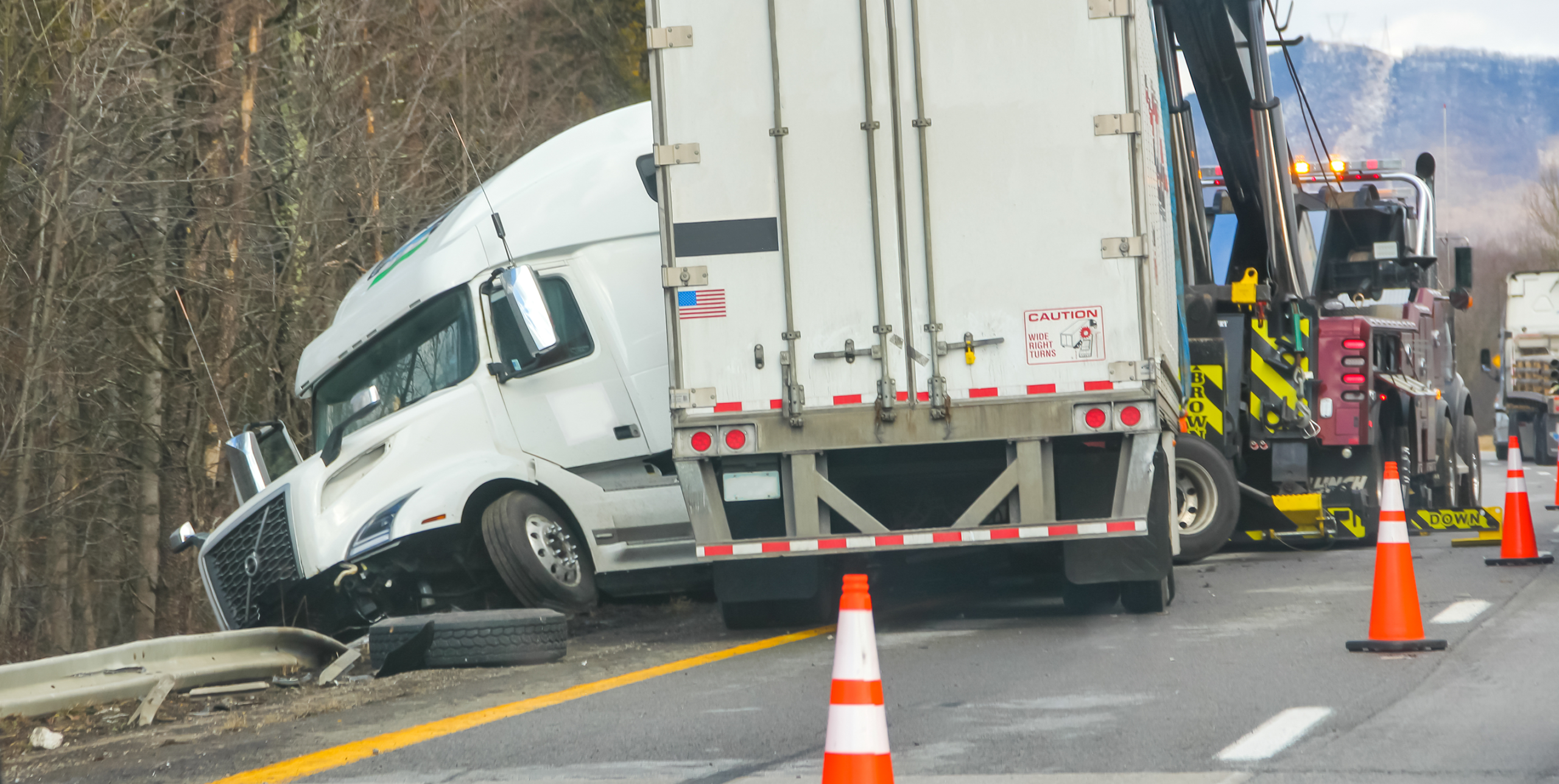

Mastering the art of turning a semi-truck isn’t just about a skill – it’s about safety. One wrong move can lead to serious consequences, from damaged property to career-ending incidents. Even hitting a lightweight object like a stop sign might go unnoticed in an 80,000-pound vehicle!
The Stakes Behind the Wheel
The stakes are high when you’re behind the wheel of a semi-truck. A single turning mistake could have severe consequences for your career and safety. Multiple traffic violations could quickly accumulate on your record, potentially adding thirty to forty points to your license. Such incidents often lead to career termination, especially if they become a pattern. Beyond the professional impact, turning errors frequently result in costly property damage and tire punctures.
Even more serious are potential hit-and-run charges, which can have lasting legal implications. These consequences underscore the critical importance of mastering proper turning techniques and maintaining constant vigilance while operating your vehicle.
We’re here to help you navigate these challenges safely. You’ll learn essential techniques for right and left turns, strategies for handling tight spaces, methods for safe U-turns, and tips for curve navigation. We’ll also cover how proper vehicle maintenance plays a crucial role in your turning success.
Remember this golden rule: Watch your trailer during every turn. Your success as a semi-truck driver depends on your ability to master these fundamental skills.
Understanding Your Vehicle
Most semi-trucks on highways today pull 53-foot trailers – these massive box trailers create unique driving challenges you need to master. Think of your truck and trailer as a team that needs perfect coordination, especially during turns.
Key Concept: Off-Tracking
A critical concept to grasp is off-tracking. When your combination vehicle makes a low-speed turn, your trailer tires follow a different path than your truck’s steering tires.
The Physics of Off-Tracking
The physics behind off-tracking is straightforward and essential to understand. A longer trailer naturally creates a greater off-tracking distance during turns, while the gap between steering tires and trailer tires plays a crucial role in determining the severity of off-tracking. It’s important to note that a 53-foot trailer will off-track significantly more than shorter trailers, requiring more careful attention and planning during turns.
Visualizing Off-Tracking
Picture this: While your truck’s steering tires might follow a wide arc, your trailer tires cut a tighter path inside that arc. This means you need extra space to execute safe turns without mounting curbs, hitting poles or signs, damaging trailer tires, or colliding with obstacles.
The Importance of Vehicle Dimensions
Your vehicle’s dimensions play a crucial role in every turn. A fully loaded semi can weigh up to 80,000 pounds – at this weight, even minor miscalculations during turns can lead to serious consequences.
Proper Techniques for Right Turns
Making successful right turns with a semi-truck requires precision and attention to detail. Here’s your step-by-step guide to executing right turns safely:
1. Signal Early
- Activate your right turn signal well before the turn
- Give other drivers ample time to react to your intentions
2. Position Your Truck
- Pull straight forward until your trailer tires clear the start of the curve
- Stay in the left portion of your lane to create space
- Avoid “jug handle” turns that put you in oncoming traffic
3. Square Off the Turn
- This technique is also known as “out straight, turn late”
- Keep your truck straight until the last possible moment
- Begin turning only when your trailer tires are past the curve’s starting point
4. Execute the Turn
- Watch your trailer tires through the convex mirror
- Stay left long enough for trailer tires to clear the entire curve
- Use your trailer to block vehicles from squeezing into the right lane
5. Complete the Turn
- Return to the right lane once your trailer clears all obstacles
- Maintain awareness of surrounding traffic
- Check your mirrors frequently during the entire maneuver
Remember: A loaded semi can weigh up to 80,000 pounds – hitting even small objects like stop signs might go unnoticed but can result in serious consequences, including tire damage and legal issues.
Strategies for Left Turns
Left turns in a semi-truck require precise lane selection and careful attention to your surroundings. Here’s what you need to know to execute safe left turns:
Selecting the Correct Lane
When making left turns in a large commercial vehicle, lane selection is crucial for safety and maneuverability. Always choose the outside lane when faced with multiple left turn lanes, as this provides the necessary space for your trailer to complete the turn safely. It’s essential to avoid using inside turn lanes, as they create potential hazards with vehicles traveling in outside lanes. By positioning your truck appropriately, you can effectively prevent other vehicles from attempting unsafe passes during the turn maneuver.
Executing the Turn
Making a safe left turn requires a methodical approach. Begin by signaling your intention well in advance to alert other drivers of your planned maneuver. As you approach the intersection, square off your turn to maintain proper control of your trailer throughout the movement. It’s crucial to pull forward sufficiently to prevent your trailer from crossing into adjacent lanes, which could endanger other vehicles.
When executing the turn itself, aim to position your truck into the leftmost lane of your target road. Throughout this process, remain vigilant and watch for impatient drivers who might attempt to pass, particularly during busy rush hour periods when motorists are more likely to make risky decisions.
Post-Turn Safety
After completing your turn, maintaining safety remains crucial. You should carefully monitor your left mirror to spot any vehicles that might be present before initiating a lane change. After you have checked that traffic conditions are good and it is safe to do so, you may start changing to the right lane. In this maneuver, it is important to keep your speed under control and stable for the smooth making of lane changes without causing traffic congestion or jeopardizing safety.
Common Mistakes to Avoid
When making turns in a commercial vehicle, several critical errors must be avoided. Turning too early from the outside lane is a frequent mistake that can lead to dangerous situations and potential collisions. Drivers should also be cautious about choosing inside turn lanes when multiple options are available, as these often provide less maneuverability and visibility. Another significant error is failing to account for obstacles on your left side, which can create unexpected hazards during the turn.
Additionally, rushing to return to the right lane after completing a turn is a dangerous practice that should be avoided. This hasty movement can put your vehicle and others at risk, particularly if you haven’t properly assessed the traffic situation or ensured adequate clearance for your trailer.
Remember: the “left to left” principle guides your turn execution – start in the left lane, complete your turn in the left lane, then safely transition right when clear. This technique maximizes safety and minimizes conflict with other vehicles sharing the road.
Managing Tight Spaces, U-Turns, and Curves Safely
Navigating tight spaces and performing complex maneuvers in a semi-truck requires precise techniques and constant awareness. Here’s what you need to know to handle these challenging situations:
Tight Space Navigation
- Position your truck as far to the left as safely possible when approaching tight right turns
- Use available lanes to your advantage – a small portion of the left lane can provide extra room
- Watch for other vehicles attempting to squeeze by on your right side
- Block potential passing zones with your trailer to prevent accidents
U-Turn Safety
- Limit sharp steering movements to prevent jackknifing
- Keep the truck and trailer as loose as possible during the turn
- A jackknife occurs when the rear corner of your truck contacts the trailer’s side
- Maintain constant trailer observation through your mirrors
Mastering Curves
- Push your vehicle to the outside of your lane when entering curves
- Your trailer naturally off-tracks toward the inside of curves
- Check your trailer position every 7-10 seconds through curves
- On two-lane roads, staying too close to the inside can push your trailer into oncoming traffic
Lane Positioning Tips
- Follow the light blue path demonstrated in curve examples
- For right curves:
- Move to the lane’s outer edge
- Prevent trailer contact with curbs or shoulders
- Monitor trailer position through convex mirrors
- For left curves:
- Maintain outer lane position
- Watch for the trailer to drift toward the center line
- Adjust speed and positioning based on curve severity
These techniques help protect your equipment and ensure safe passage through challenging road configurations. Constantly scan your surroundings and adjust your approach based on road conditions and traffic patterns.
The Role of Regular Maintenance in Ensuring Safety on the Road
Safe turning maneuvers depend heavily on your truck’s mechanical condition. A well-maintained semi truck responds better to steering inputs and maintains stability during critical turning moments.
Key Maintenance Areas for Safe Turning
Tire health is essential, as regular tire inspections prevent blowouts during turns. Proper tire pressure and tread depth give you the grip needed for controlled turns. The steering system should be well maintained. A responsive steering system will let you make accurate turning maneuvers. Suspension components are very important in keeping your truck stable during turns and avoiding rollovers.
We at Birmingham Mobile Semi Repair deliver comprehensive diesel repair services designed to maintain your rig’s optimal turning performance. Our preventative maintenance program is dedicated and includes round-the-clock mobile repairs directly at your location, coupled with thorough steering system inspections. We offer professional tire services and replacements, along with detailed suspension system maintenance to ensure your vehicle’s safety and reliability.
Our emergency roadside assistance service is available to support you whenever unexpected issues arise, keeping your operations running smoothly with minimal disruption. We realize how imperative it is to keep your semi truck rolling and make every effort to provide prompt, efficient service that meets the highest standards in the industry.
We bring the expertise to you, keeping downtime at a minimum and your truck ready for the demanding turns of the road ahead. Our certified technicians use advanced diagnostic tools to identify potential issues before they compromise your turning safety.
Choose Birmingham Mobile Semi Repair
It takes time and dedication to master the art of turning a semi-truck. Your safety—and the safety of others—depends on your skill behind the wheel. We encourage you to put these turning techniques into practice on your daily routes, always keeping in mind to watch your trailer and maintain proper positioning.
Need expert assistance with your semi truck maintenance? Birmingham Mobile Semi Repair stands ready to help. Our skilled technicians provide comprehensive diesel repair services to keep your rig running smoothly and safely on the road.
Your success on the road starts with proper technique and reliable maintenance. Let’s work together to keep your semi truck in prime condition for those challenging turns ahead. Give us a call today at (307) 922-1966.